Introduction: Why Image to Text AI Is Transforming Creative Workflows
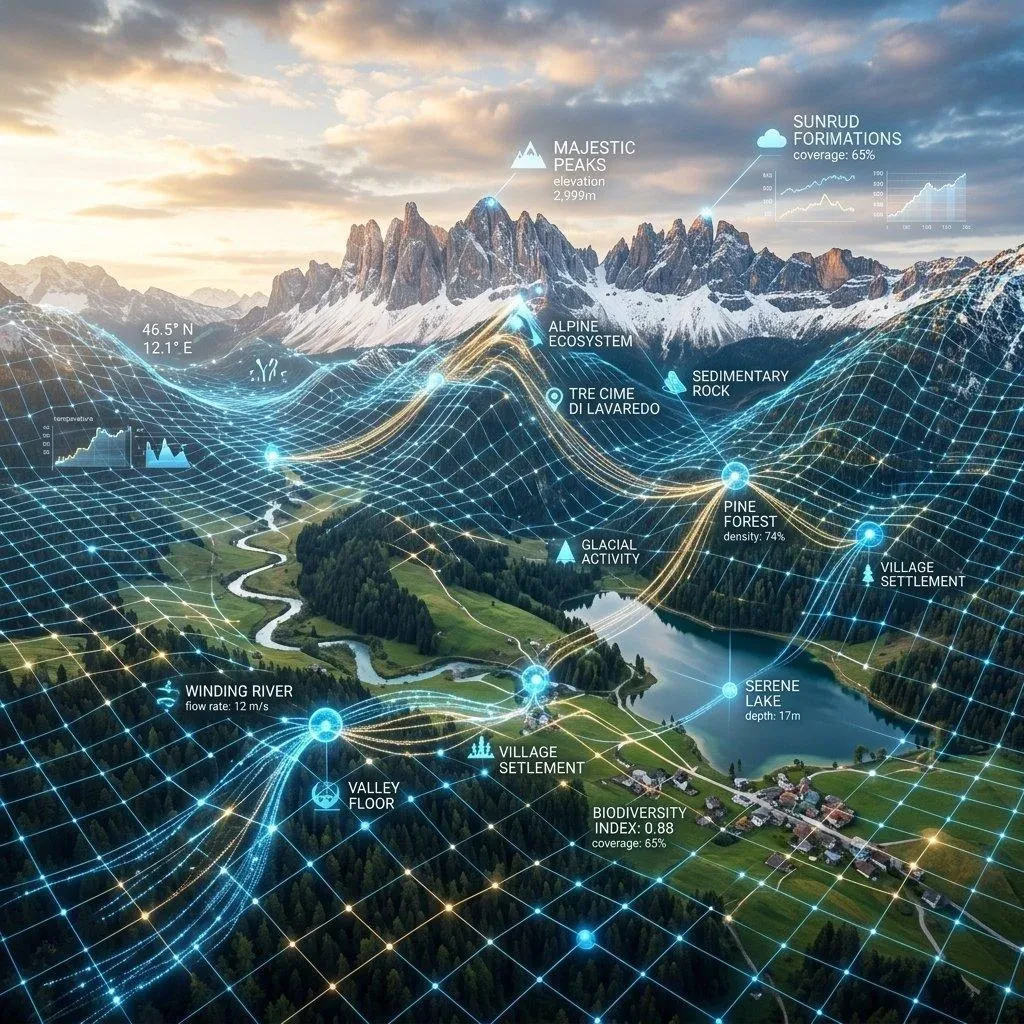
Artificial intelligence has rapidly evolved from a niche technology into the backbone of modern creative workflows. Among its many capabilities, image to text AI — the ability to automatically understand and describe visual content in natural language — stands out as a transformative breakthrough. In 2025, this technology powers everything from accessibility tools and content moderation systems to sophisticated AI image prompt generators like PromtStudio.
This comprehensive guide will walk you through everything you need to know: how image-to-text AI works under the hood, which models power today's best tools, what you can accomplish with it, and how PromtStudio leverages it to supercharge your AI art creation process.
What Is Image to Text AI?
Image to text AI refers to artificial intelligence systems that can analyze an image and produce a natural language description of its contents. This capability falls under the broader umbrella of multimodal AI — systems that can process and reason across multiple types of data simultaneously, including images, text, audio, and video.
Unlike traditional optical character recognition (OCR), which simply reads printed text from images, modern image-to-text AI understands the meaning of visual content. It can describe complex scenes, identify artistic styles, recognize emotional tones, and generate highly detailed textual representations of what it perceives.
Key capabilities of modern image-to-text AI include:
- Scene understanding: Recognizing and describing entire environments with all their elements
- Object detection: Identifying specific objects, their positions, and their relationships
- Style recognition: Detecting artistic styles, photographic techniques, and aesthetic characteristics
- Attribute identification: Understanding colors, textures, lighting, mood, and composition
- Contextual reasoning: Inferring meaning, narrative, and context from visual cues
The Technology Behind Image to Text AI: Vision-Language Models
The core technology powering modern image recognition AI is the Vision-Language Model (VLM) — a class of deep learning model trained on massive datasets containing paired images and text. These models learn to align visual representations with linguistic concepts, enabling them to "describe" images in natural language.
LLaVA: The Open-Source Champion
LLaVA (Large Language and Vision Assistant) is one of the most influential open-source vision-language models available today. Developed by researchers at the University of Wisconsin-Madison and Microsoft Research, LLaVA combines a powerful vision encoder (typically CLIP) with a large language model backbone (like LLaMA or Mistral) to create a unified multimodal system.
What makes LLaVA particularly notable for applications like PromtStudio:
- High-quality image descriptions: LLaVA produces detailed, nuanced descriptions that capture both obvious subjects and subtle visual details
- Open-source availability: Unlike proprietary models, LLaVA can be deployed and fine-tuned by developers
- Instruction-following: LLaVA excels at following complex prompting instructions, making it ideal for generating structured art prompts
- Continuous improvement: The LLaVA family has evolved rapidly, with LLaVA-1.5, LLaVA-NeXT, and subsequent versions offering dramatically improved performance
Other Leading VLMs in 2025
The image-to-text AI landscape has matured significantly. Other top-tier models include:
- GPT-4V / GPT-4o (OpenAI): Exceptional at detailed descriptions and complex reasoning about images
- Gemini Pro Vision (Google): Strong multimodal capabilities with excellent multilingual support
- Claude 3 Vision (Anthropic): Noted for nuanced, thoughtful image analysis
- InternVL / Qwen-VL: High-performance open-source alternatives popular in research communities
How PromtStudio Uses Image to Text AI
PromtStudio sits at the intersection of image to text AI and prompt engineering. Here's the intelligent pipeline that powers every prompt generation:
- Image ingestion: Your uploaded image is preprocessed and encoded into a high-dimensional visual representation
- Visual analysis: The vision-language model analyzes the encoded image, identifying all key visual attributes — subjects, style, mood, lighting, composition, color palette, and technical characteristics
- Platform-specific prompt engineering: The raw analysis is then processed through proprietary prompt engineering algorithms that restructure the information into the optimal syntax for your chosen AI art platform
- Style overlay: If you've selected a style modifier, additional curated descriptors are intelligently blended with the base analysis
- Output optimization: The final prompt is refined for clarity, specificity, and effectiveness, ensuring maximum fidelity when used with AI art generators
Top Use Cases for Image to Text AI in 2025
1. AI Art Prompt Generation
The most direct use case for creative professionals — converting any image into a ready-to-use prompt for Midjourney, DALL·E, Stable Diffusion, or Firefly. This is the core functionality of PromtStudio and the use case that has seen explosive growth in 2025.
2. Content Accessibility
Image-to-text AI generates alt text descriptions for images, making visual content accessible to users with visual impairments. Platforms and publishers increasingly use this technology to comply with accessibility standards like WCAG 2.1.
3. E-commerce Product Description Generation
Retailers upload product photos and let AI generate detailed descriptions automatically — a process that previously required hours of manual copywriting.
4. Content Moderation
Social platforms use image recognition AI to automatically detect and flag inappropriate content at scale, far faster than human moderators could manage.
5. Medical Image Analysis
In healthcare, specialized vision-language models assist radiologists and pathologists by generating preliminary descriptions of medical scans, potentially accelerating diagnosis.
6. Visual Search
E-commerce and media platforms allow users to search by uploading an image — "find me more like this" — powered by picture to text understanding.
Image to Text AI vs. Traditional Image Analysis: A Comparison
To appreciate how far the technology has come, consider what was possible just five years ago versus today:
- Traditional (2020): Basic object detection with fixed categories, no style understanding, no contextual reasoning, English-only outputs
- Modern VLMs (2025): Open-ended scene description, nuanced style analysis, emotional and atmospheric understanding, multilingual outputs, instruction-following capabilities
The leap represents not just an incremental improvement but a fundamental shift in what machines can understand about the visual world.
Limitations to Be Aware Of
While powerful, image to text AI is not perfect. Understanding its limitations helps you get the best results:
- Hallucination: Models can occasionally "see" things that aren't there, particularly in abstract or ambiguous images
- Fine-grained detail: Very small text within images may be misread or missed entirely
- Cultural context: Some cultural references or regional visual conventions may not be correctly interpreted
- Proprietary art styles: Highly specific proprietary artistic styles may be described generically rather than with precise attribution
PromtStudio mitigates many of these limitations through its post-processing pipeline and style modifier system.
Getting the Most From Image to Text AI With PromtStudio
Here are expert strategies for maximizing the quality of your AI-generated prompts:
- Upload the highest quality image available — higher resolution gives the vision model more data to work with
- Choose images with distinctive and intentional aesthetic qualities — purposely lit, composed, and styled images yield more precise descriptions
- Use the platform selector to ensure syntax compatibility with your AI art tool of choice
- Iterate: Generate multiple prompts from slightly different crops or versions of the same image for variety
- Combine AI generation with manual refinement for the highest possible output quality
The Future of Image to Text AI
The trajectory of image recognition AI points toward even more sophisticated capabilities in the near future: real-time video analysis, 3D scene understanding, emotion and intent recognition, and seamless integration across all creative software. For AI artists and content creators, this means tools like PromtStudio will only become more powerful and precise.
The creators who learn to work fluently with image-to-text AI today will be the ones leading the next generation of visual storytelling and digital art creation.
Start Exploring Image to Text AI Today
There has never been a better time to harness the power of image to text AI for your creative work. PromtStudio gives you instant access to cutting-edge vision-language models — for free, with no technical knowledge required.
Try PromtStudio free and transform any image into a professional-grade AI art prompt in seconds. The future of creative AI is visual — and it starts with understanding images.